
As temperatures begin to cool, many homeowners focus on preparing their lawns for winter. However, fall is also a time when grubworms can cause noticeable damage to your grass. If you notice brown patches, thinning turf, or areas of grass that pull up easily, lawn grubs could be the culprit.
Understanding when grubworms are active, how to recognize the signs of an infestation, and when to treat them can help you protect your lawn throughout the fall season.
What Are Grubworms?
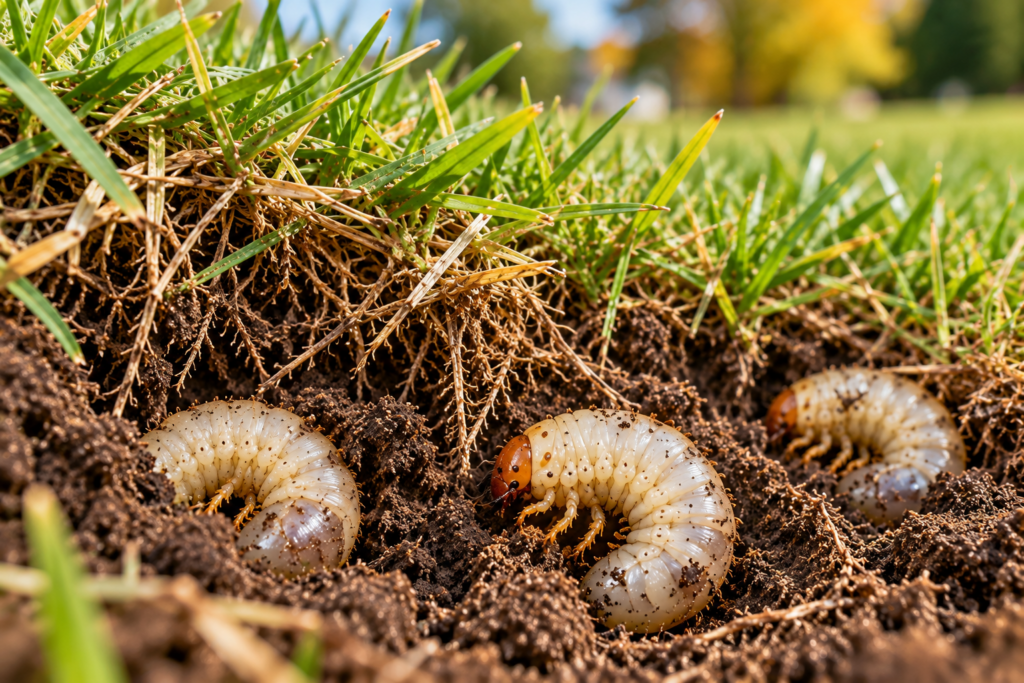
Grubworms, commonly called lawn grubs, are the C-shaped, white larvae of beetles such as June bugs and Japanese beetles. These pests live beneath the soil surface, where they feed on grass roots and interfere with your lawn’s ability to absorb water and nutrients.
According to JC’s Landscaping, “These bugs live underneath the grass, in the soil and dine on the grass roots.” If you’re concerned about grubworms or other common lawn pests, learning to recognize the signs is a helpful first step. You can learn more about lawn bugs by reading JC’s Landscaping’s full guide, “How to Get Bugs Out of Grass.”
Because grubworms feed below ground, homeowners may not notice them until visible damage appears on the lawn. As the roots become damaged, grass may turn brown, thin out, or become loose enough to lift from the soil.
Are Grubworms More Active in the Fall?
Grubworm activity depends on the species, local weather conditions, and the pest’s stage of development. In North Texas, fall can be an important time to watch for lawn grub activity.
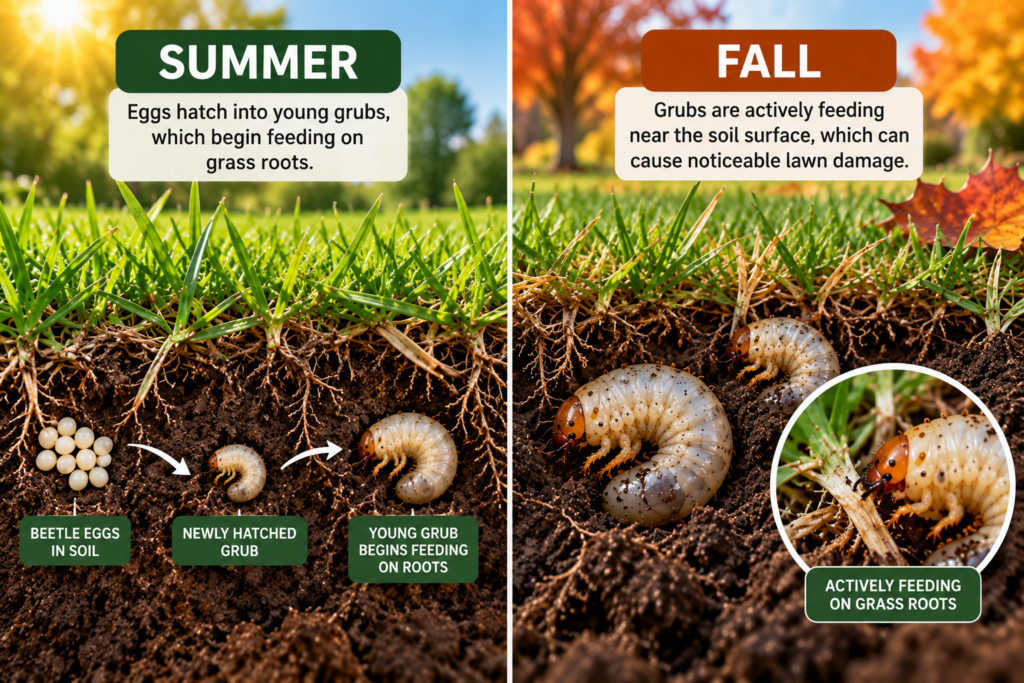
Many common lawn grubs hatch during the summer and begin feeding on grass roots. By late summer and early fall, the young grubs may be actively feeding near the soil surface, where they can cause significant damage to turf.
As temperatures cool, grubworms generally move deeper into the soil. Their feeding activity slows as they prepare to overwinter, although the timing varies by species and weather conditions.
For North Texas homeowners, early fall can be a useful time to inspect the lawn for signs of grub damage. Waiting until the grass has developed large brown patches can make recovery more difficult.
Signs of Grubworm Damage in Your Lawn
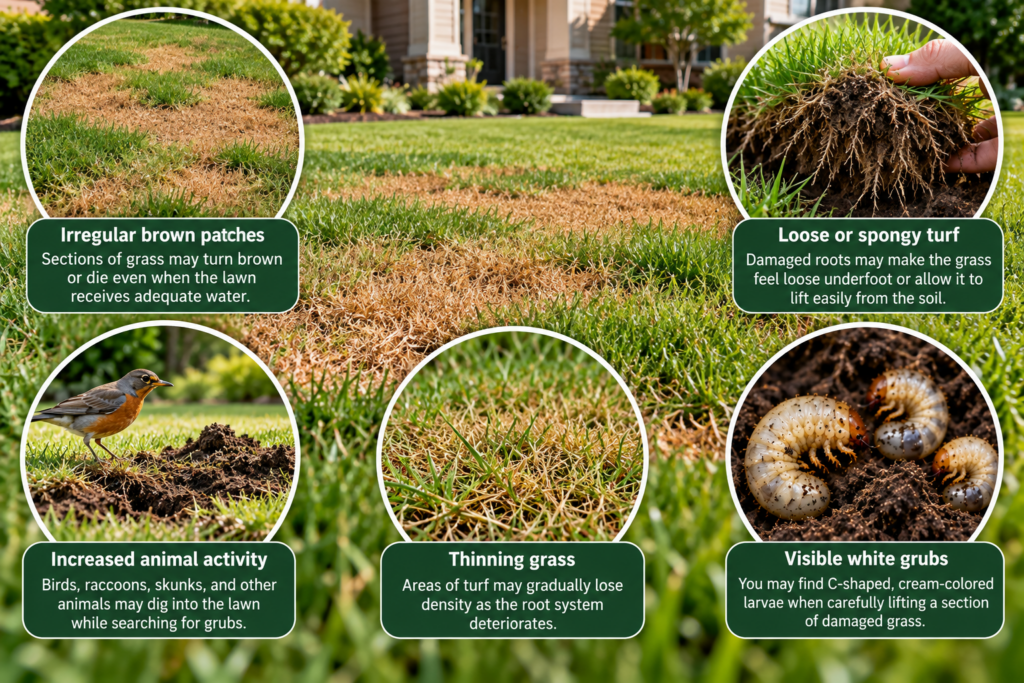
Grubworm damage can resemble drought stress, disease, or other lawn problems. Look for these common warning signs:
- Irregular brown patches: Sections of grass may turn brown or die even when the lawn receives adequate water.
- Loose or spongy turf: Damaged roots may make the grass feel loose underfoot or allow it to lift easily from the soil.
- Increased animal activity: Birds, raccoons, skunks, and other animals may dig into the lawn while searching for grubs.
- Thinning grass: Areas of turf may gradually lose density as the root system deteriorates.
- Visible white grubs: You may find C-shaped, cream-colored larvae when carefully lifting a section of damaged grass.
Keep in mind that these symptoms do not automatically mean you have grubworms. Checking the soil and roots for larvae can help determine whether grubs are responsible.
How to Check Your Lawn for Grubworms
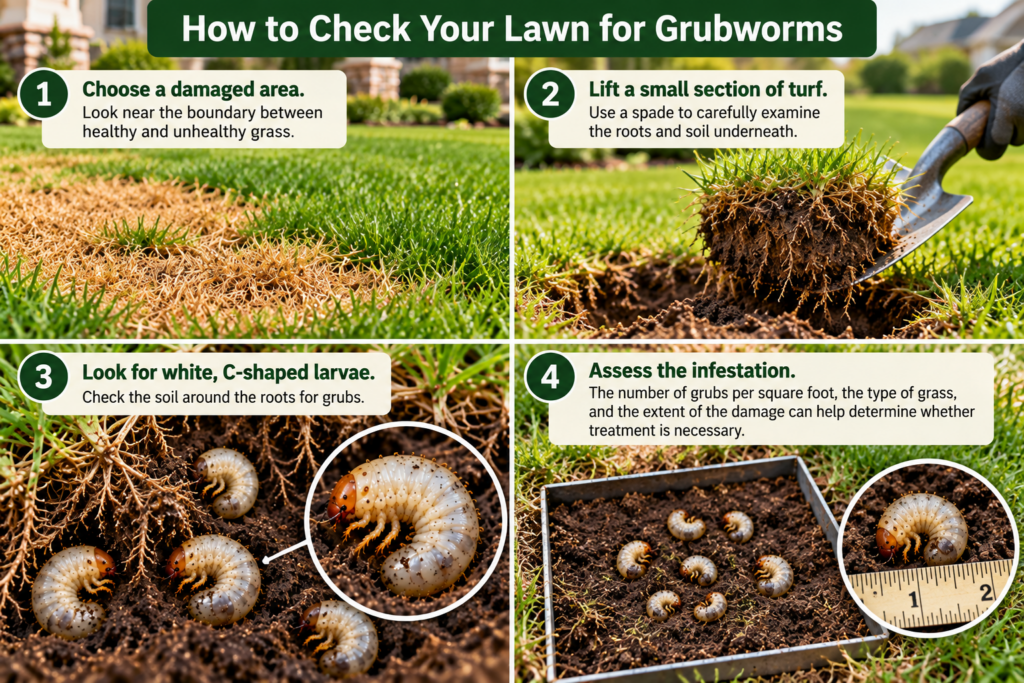
If you suspect a grubworm problem, inspect an area where the grass is beginning to brown or thin.
- Choose a damaged area. Look near the boundary between healthy and unhealthy grass.
- Lift a small section of turf. Use a spade to carefully examine the roots and soil underneath.
- Look for white, C-shaped larvae. Check the soil around the roots for grubs.
- Assess the infestation. The number of grubs per square foot, the type of grass, and the extent of the damage can help determine whether treatment is necessary.
Finding one or two grubs does not necessarily mean your lawn needs treatment. The appropriate response depends on the number of grubs present, the species involved, and whether the grass is showing damage.
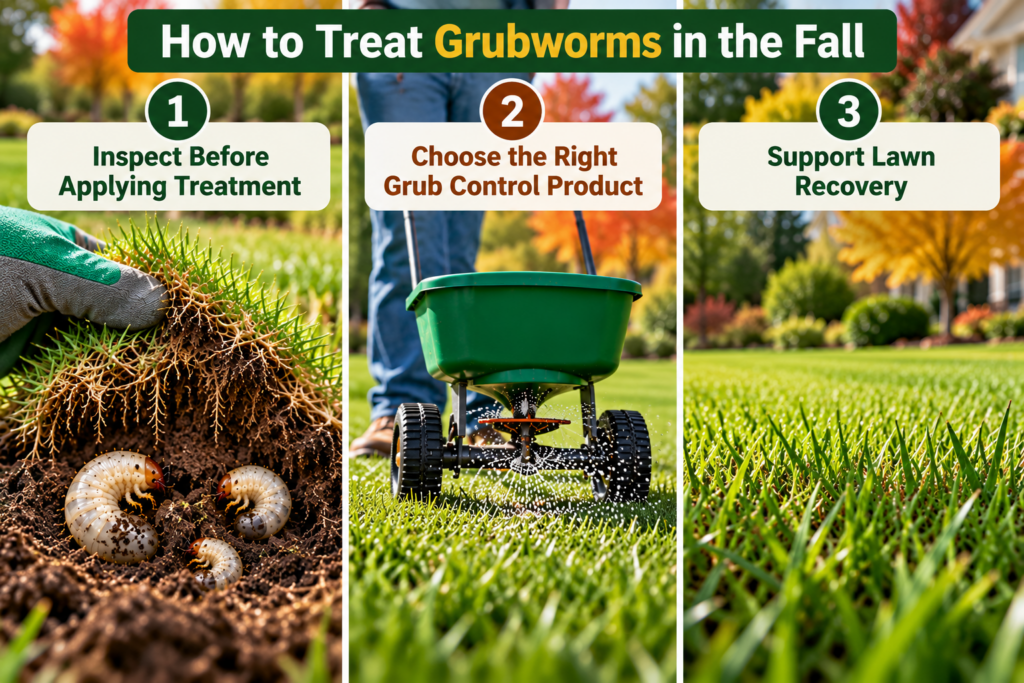
How to Treat Grubworms in the Fall
The right treatment depends on the grub species, its life stage, and the severity of the infestation. Early identification is important because mature grubs may be harder to control than younger larvae.
Inspect Before Applying Treatment
Start by confirming that grubs are causing the problem. Applying a grub control product without identifying the pest can waste time and money while leaving the actual lawn issue unresolved.
Choose the Right Grub Control Product
Some products are designed to prevent damage from young grubs, while others target actively feeding larvae. Read the product label carefully to confirm the application timing, target pests, watering requirements, and any restrictions.
Fall treatment may be effective when grubs are still actively feeding near the surface, but results can be less reliable once they have moved deeper into the soil. If the infestation is severe or the correct treatment timing is unclear, a lawn care professional can help determine the next steps.
Support Lawn Recovery
After addressing the infestation, give your grass the conditions it needs to recover. Depending on your lawn’s condition and grass type, this may include proper watering, mowing at the recommended height, and repairing severely damaged areas.
Avoid excessive watering or fertilizer applications in an attempt to fix brown patches before identifying the cause. Grub damage, drought stress, and lawn disease require different approaches.
How to Prevent Grubworm Damage
Although grubworms cannot always be prevented, regular lawn inspections can help you catch problems before they spread.
- Monitor your lawn in late summer and early fall. Pay attention to brown patches, loose turf, and unusual animal activity.
- Check for grubs when symptoms appear. Confirm the problem before choosing a treatment.
- Follow a seasonal lawn care plan. Proper mowing, watering, and maintenance help keep your grass in good condition.
- Use preventive treatments appropriately. If grubworms have been a recurring problem, ask a lawn care professional whether preventive control is appropriate for your property.
- Address damage early. Prompt identification can help limit the area affected and support faster recovery.
North Texas weather can vary considerably from one fall to the next, so base your lawn care decisions on actual conditions and pest activity rather than the calendar alone.
Protect Your North Texas Lawn From Grubworms
Grubworms can damage your lawn during late summer and early fall by feeding on the roots beneath the soil. Knowing what to look for and checking suspicious areas early can help you determine whether treatment is needed before the damage becomes extensive.
With regular inspections and the right treatment approach, you can help protect your North Texas lawn and prepare it for the cooler months ahead.